
5 Things About Judah Maccabee That Nobody Talks About

How much do we really know about the man, the myth, the legend?

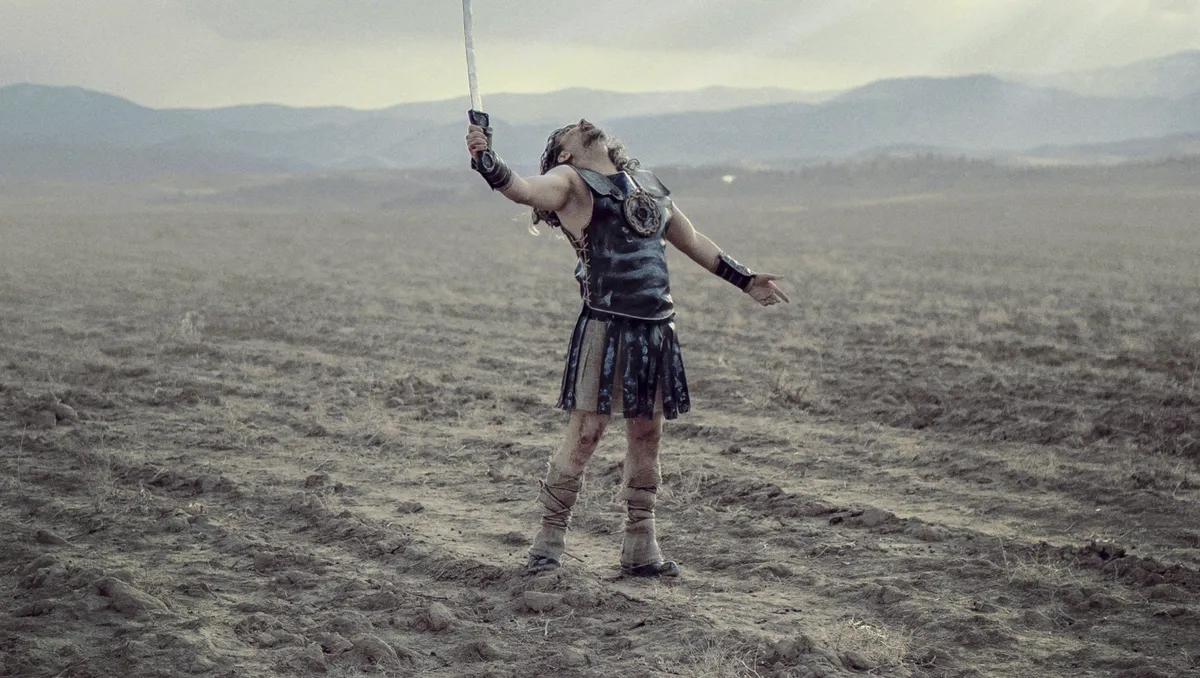
Judah Maccabee and Hanukkah. They go together like pastrami and rye. Like mezuzot and doorposts. Like Passover and Moses.
Judah is the quintessential hero of Jewish history. He represents the victory of the underdog, the determination of the downtrodden, the rescuer of Jewish extinction. This famed military leader of the Maccabees has become synonymous with the “Festival of Lights.”
But who was this Judah Maccabee really? How much do we really know about the man, the myth, the legend? Here are five things about Judah Maccabee that nobody talks about:
1. No one really knows what a “Maccabee” is.
The most common answer you’ll hear is that it means “hammer,” possibly from the Aramaic word maqqaba. The idea being that this rebel group of Jewish warriors earned the nickname for attacking like a hammer—sharp, strong, and on target.
But it might also be an acronym for the Hebrew phrase Mi kamokha ba’elim YHWH, which translates to “Who among the gods is like you, Lord?” from Exodus 15:11. Some think this might even have been Judah’s battle cry.
A third idea is that “Maccabee” comes from the Hebrew makhban, meaning “a hammerhead.” After all, history has bequeathed to us names like “Ptolemy the Fat-Bellied” and “Antiochus VIII Grypus,” which translates to “Antiochus the Hook-Nosed.” As Eliezer Segal has written, “Many innocuous-sounding family names that are now in common and unobjectionable use originated in physical epithets of just that sort. And when you think of it, does the name ‘Judah the Hammerhead’ really sound any worse than ‘Norman Schwartzkopf’?”
2. Judah didn’t just fight the Greeks.
As it’s usually told, Antiochus Epiphanes, the evil Syrian-Greek king, tried to destroy Judaism until Judah and his brothers rose up and single-handedly defeated Antiochus’ armies. Our people survived. Judaism survived. Let’s eat!
The facts on the ground were actually more complex. Some Jews were quick to assimilate, attempting to become as Greek as possible. Others were holding on tight to their Jewish traditions and lifestyle. The Hanukkah battle was not only Antiochus vs. the Jews; it was also Jew vs. Jew, assimilationist vs. traditionalist (a war many are still fighting). Judah was among the more traditionally minded, and truth be told, if not for him and others like him, Judaism may well have disappeared with or without Antiochus.

3. He became a cultural icon.
Famed Jewish artist Arthur Szyk included Judah Maccabee in his playing card set of Jewish heroes produced in the 1930s. A Maccabi Jewish sports club started up in 1895 in Constantinople, Turkey, the ancestor of today’s international Maccabiah Games. A 1961 Israeli postage stamp features Judah Maccabee.
Earlier, the Federation of Jewish Zionists produced a magazine called The Maccabean. Go back in time, and you’ll find Peter Paul Rubens’ painting The Triumph of Judas Maccabeus as well as Handel’s oratorio Judas Maccabeus.
Today, look on Amazon and you’ll find graphic novels such as Judah “The Hammer” Maccabee or Shield of the Maccabees. In one of these versions, the original Judah’s hammer passes on to his descendants in every generation. In all of these, Judah gets the spotlight and doesn’t share it with his brothers. Judah’s valor, prowess, and martial ability have been an inspiration to many.
4. Judah never found a flask of oil that lasted eight days.
One of the central parts of the Hanukkah story as we tell it today has to do with oil. You know the story: when the Maccabees reclaimed the Temple from Antiochus, there was only enough oil to last one day, and it would take a swift rider eight days to obtain a fresh supply. Miracle of miracles, the oil lasted until more was brought to Jerusalem. In commemoration, today we light a nine-branched menorah, as opposed to the seven-branched version that was in the Temple itself. One branch for each of the eight days of the miracle and a ninth, the shammas, with which to light the others. We fry latkes in oil as another way to remember, commemorating that “a great miracle happened there!”
Except that it didn’t.
The miracle of the oil is a story dating from the time of the Talmud, which was compiled many centuries after Judah lived. Some insist that it really happened anyway; others take it as a legend. Historically, we have no evidence that Judah knew anything about a miracle of oil. It’s still fun to celebrate it, though!
5. The story of Judah and the Maccabees is not from the Hebrew Bible.
For its standing among Jewish holidays, one would think Hanukkah was mentioned explicitly in the Hebrew Bible. However, the only historical account we have is from the 2nd century BC books, First Maccabees and Second Maccabees. Further information comes from the first century Jewish historian Josephus, who based his writings largely on First and Second Maccabees. However, the celebration of Hanukkah, if not Judah himself, is found in the New Testament in John 10:22.
Given that our pool of information is pretty limited, it’s amazing to see the place that Judah has come to occupy in both Jewish thought and our culture in general.
What can Judah Maccabee teach us today? For one thing, that it’s worth standing up for what we believe—especially when standing up will foster faith in God and the continuity of the Jewish people. For another, that God will preserve our people as he promised throughout Scripture.
Judah was someone that God used to ensure that the Jewish nation would not be destroyed, but the real hero of Hanukkah is the Lord himself. Judah himself says this in First Maccabees 3:18–19: “In the sight of Heaven there is no difference between deliverance by many or by few; for victory in war does not depend upon the size of the army, but on strength that comes from Heaven.” Or as the popular Hanukkah song “Maoz Tzur” puts it: “And Thy word broke their sword, When our own strength failed us.” Happy Hanukkah!

Introducing the Inherit Podcast
Join us for deeper conversations and behind-the-scenes insights into the articles and authors shaping Inherit.

Endnotes
- Eliezer Segal, "Heroes, Hammers and Hanukkah," From the Sources, June 17, 2023.
- “Who We Are: The Maccabi World Union,” Maccabiah, accessed December 8, 2025.
- David Geffen, “Why Judah Maccabee is our hero,” The Jerusalem Post, December 2, 2021.
- “JUDAH ‘the Hammer’ MACCABEE,” The Mighty Crusaders Network, accessed December 8, 2025.
Meet The Editor


